
Dartmouth's provost is out over his own AI use. He had just written a paper about it.
The president who accepted his resignation still wants more AI on campus, with one condition: leaders have to disclose how they use it.
 DevIsDead Newsroom
Dartmouth's provost has resigned after a controversy over his own use of AI, Ars Technica reported. Nate Anderson's headline notes the irony: he had previously warned about AI cheating. The text available to us doesn't spell out exactly what triggered the resignation, so read Ars for the full account.
What we do know is the line Dartmouth is drawing. President Sian Leah Beilock, who wrote a piece for The Atlantic in September titled "Why I Want More AI at Dartmouth," isn't backing away from AI. She says leaders must hold themselves to the highest standards, which in practice means being open about how they use it.
The paper
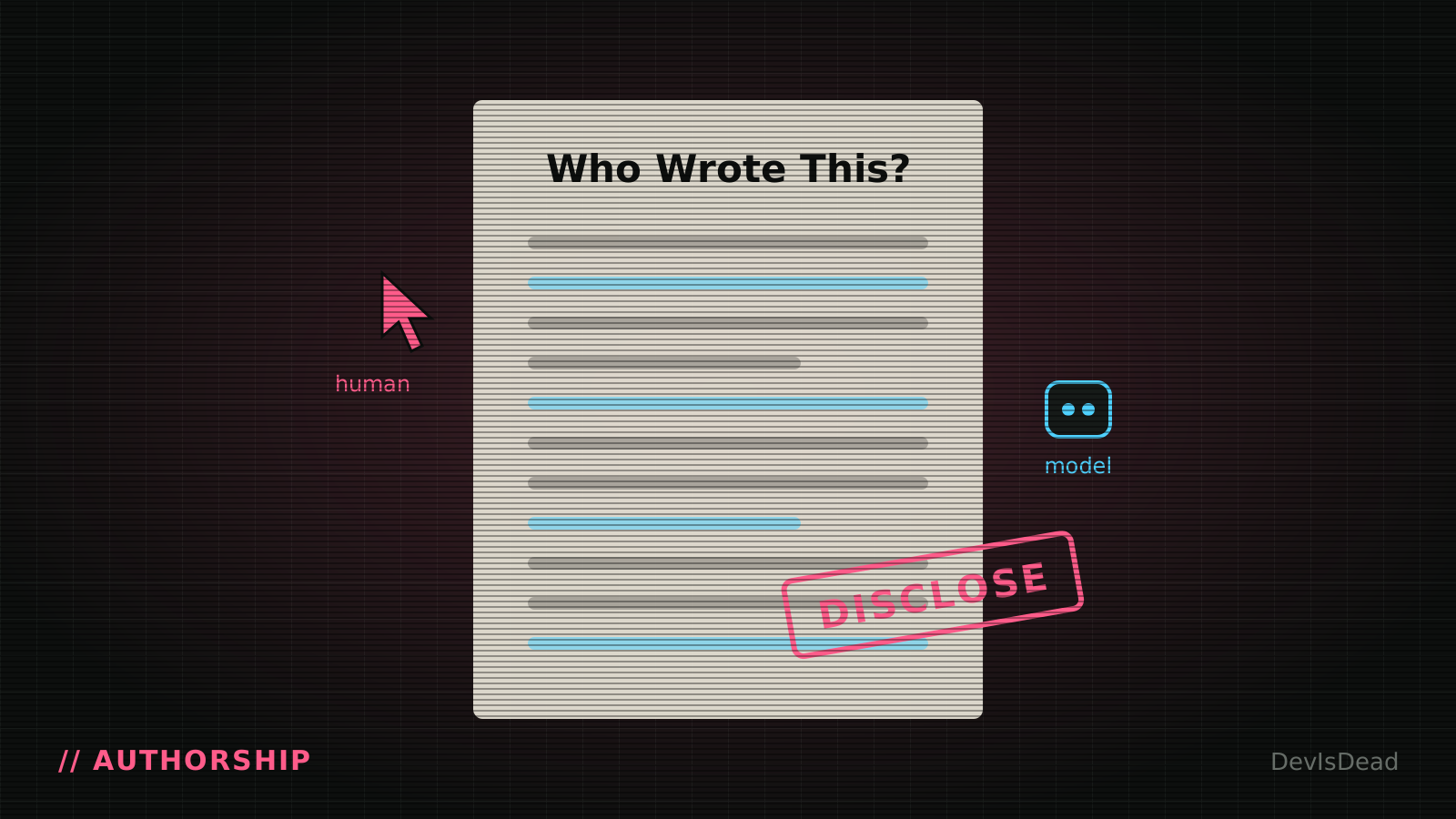
Provost Schnell's September 2026 paper on AI detection, called Who Wrote This?, argues that sorting text into human-written or AI-written is too simple. What matters, in his view, is that a human takes full responsibility for the result. He describes using GPT-5.6 Pro to shape the argument, find literature and draft early sections, GPT-5.6 Sol for language edits, and both GPT-5.6 Pro and Claude Fable 5.1 as critical reviewers, while he rewrote most of it and made the final calls. He still refuses to call the models co-authors, arguing that contributing to a work and authoring it are different roles.
The takeaway
The debate is moving from whether you used AI to whether you said so, and how much. For anyone shipping code, docs or papers with AI help, a clear note on what the tools did is starting to look like basic professional hygiene.
Scoreboard update: Humans +1. Dartmouth makes AI disclosure the rule for its leaders.
Comments 0